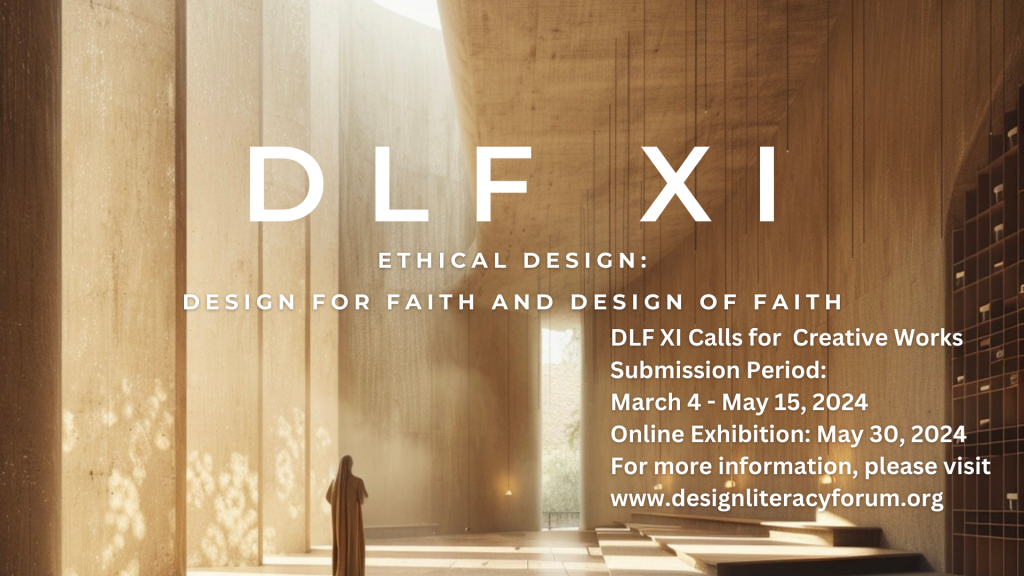
DLF XI Calls for Submissions: Ethical Design – Design of Faith and Design for Faith
We are excited to announce an open call for submissions for our upcoming online exhibition focusing on Ethical Design, with a special emphasis on the design of faith and design for faith. This exhibition aims to explore the intersection of design and faith, highlighting the importance of ethical considerations in creative work.
Submissions are open from March 4 to May 15, 2024. We invite designers, artists, and creatives from all backgrounds to submit their work that reflects the theme of Ethical Design within the context of faith.
Whether you’re exploring traditional religious symbols, modern interpretations of spiritual concepts, innovative approaches to ethical design principles in faith-based contexts or environmental consciousness, we welcome your submissions.
Key Dates:
• Submission Period: March 4 – May 15, 2024
• Online Exhibition: May 30, 2024
Selected submissions will be featured in our online exhibition on May 30, 2024, providing a platform for your work to be showcased to a global audience passionate about ethical design and faith-inspired creativity.
To submit your work or for more information, please visit http://www.designliteracyforum.org
We look forward to seeing your innovative and thought-provoking designs!
Warm regards,
Asst. Prof. Chutarat Laomanacharoen,
DLF XI Coordinator
To participate, please complete “dlf-xi-submission” form and send to: chutaratnch@au.edu within May 15, 2024.
DLF XI Design For Faith and Design of Faith
Creative Work Exhibition
Embedding Sustainability: The Charm of Upcycled Accessories
Author Name: Sasinut Lhaitananont
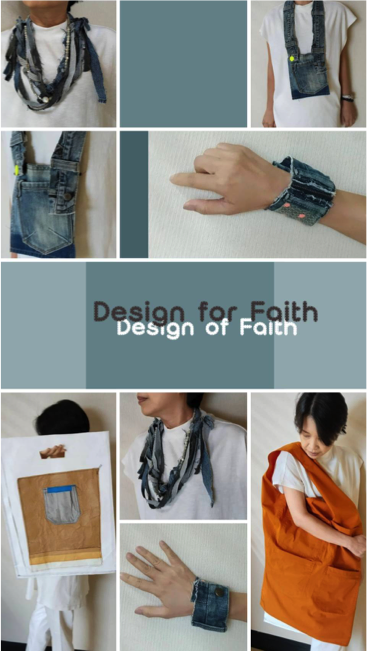
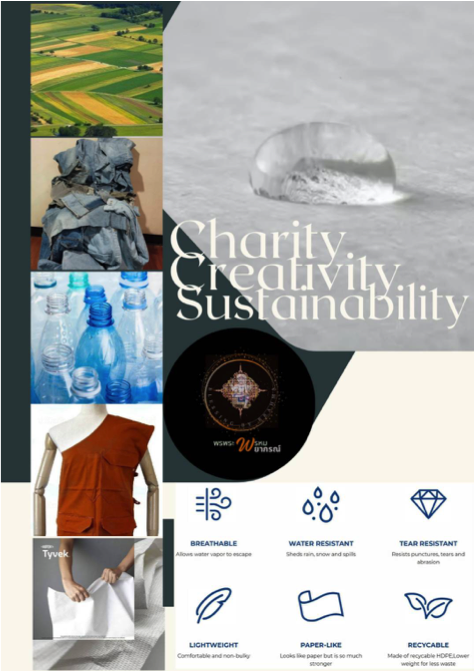
In the search for eco-friendly fashion, upcycled accessories have emerged as remarkable examples of creativity and sustainability. From cuff bracelet to phone bag, handbag, and necklace. These pieces are not only displaying style but also promoting a healthier approach to consumption. All pieces are designed for Blessing by Brahma Forecasting (พรพระพรหมพยากรณ์) where it is a center of the fundraising project that directly contributes to charity causes.
Upcycled handbag crafted from Angsa (a shoulder piece worn by a Buddhist monk made of recycled plastic drinking bottles) and Tyvek which is a high-value recyclable material that made of high-density polyethylene (HDPE) and it does not contain binders, fillers and plasticizers. The upcycled handbag is not only designed to repurpose Angsa and the use of Tyvek that are both functional and aesthetical, but also put the Earth’s wellbeing at the center of the designer’s creation.
Additionally, upcycled denim cuff bracelet, necklace, and phone bag provide a stylish way to promote sustainability. Each is a unique piece of fashion accessory that not only looks fashionable but also helps reduce textile waste by repurposing old denim into something new and redesigned.
To conclude, upcycled accessories such as cuff bracelet, phone bag, handbag and necklace are remarkable examples of sustainable style. By embracing these eco-friendly alternatives, users can make a positive impact on the environment while still looking great. Let’s help celebrate the charm of upcycled fashion and make it possible for a more sustainable future. These ethically designed accessories reflect the environmental impact of products and services throughout their lifecycle, from production and use to disposal.
Sacred Headwear: Embodying Faith and Diversity
Author Name: Dr. Chayada Thanavisuth
Co-Author Name: Sasinut Lhaitananont
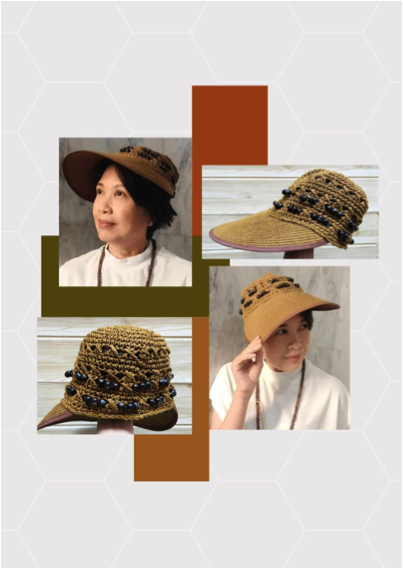
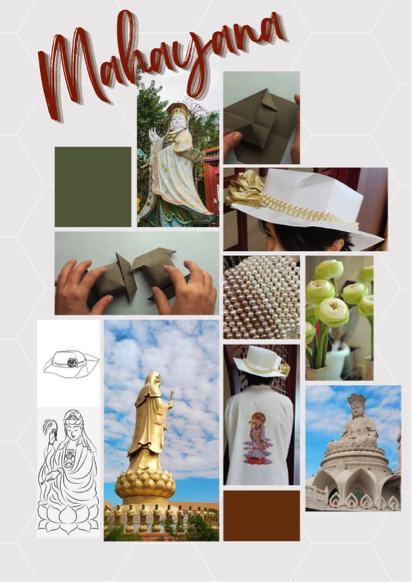
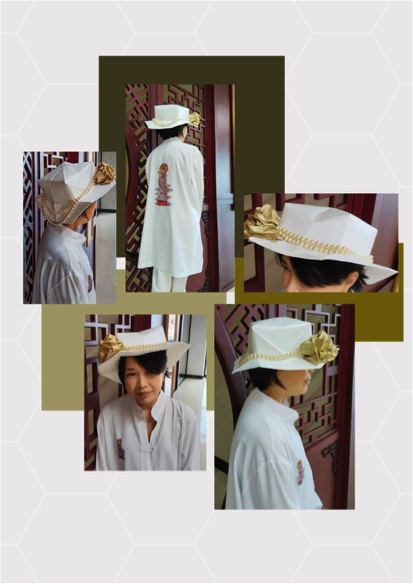
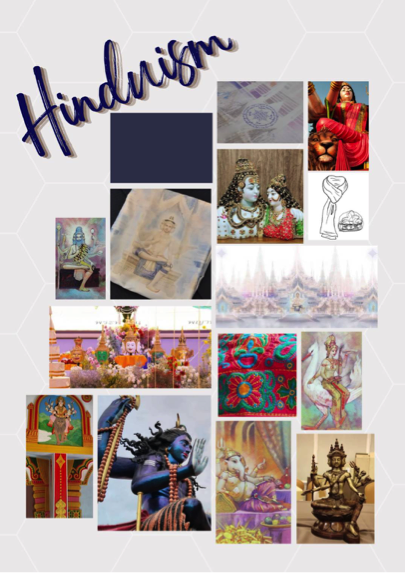
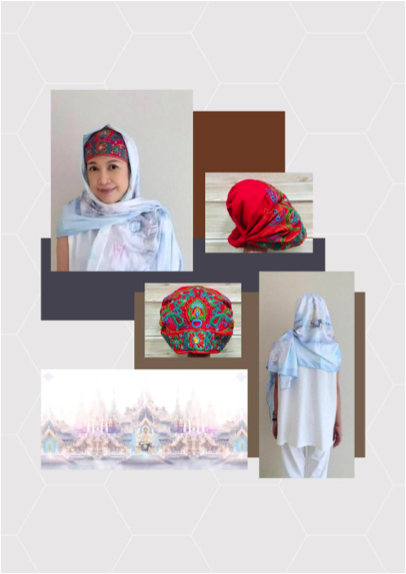
In the area of religious symbolism and personal expression, headwear holds a special place as both practical garments and powerful symbols of faith. A collection inspired by the traditions of Theravada Buddhism, Mahayana Buddhism, and Hinduism showcases the intricate interplay between design of faith and design for faith.
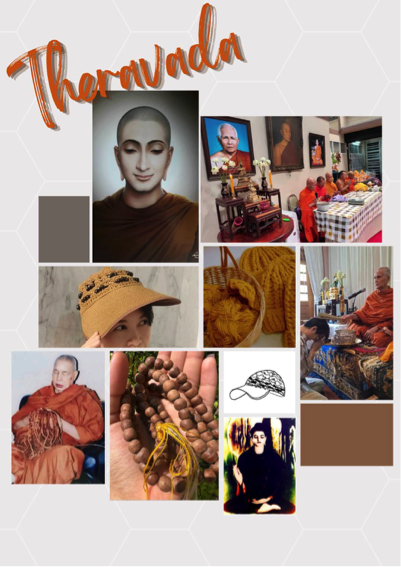
From the beliefs of Theravada Buddhism, headwear in this collection embodies simplicity and mindfulness. Crafted from lightweight sacred beads in serene colors, they convey a sense of peace and detachment. The design of faith is evident in their clean lines and unadorned simplicity, reflecting the core principles of this tradition. The sacred beads on the headwear reflect Theravada spirituality emphasizing contemplation, ethical conduct, meditation, and self-discipline.
In contrast, headwear inspired by Mahayana Buddhism embraces symbolism and sacred imagery. Intricate patterns represent golden lotus flower and pearl beads, and respected bodhisattvas, embodying the spiritual richness of this tradition. This design for faith is manifested through meticulous respect for sacred symbols. It becomes a vessel for spiritual contemplation, inviting wearers to connect with the divine through visual storytelling of Bodhisattva Avalokitesvara (Guanyin).
The Hindu-inspired headscarf in the collection come with vibrant colors and elaborate decorations, reflecting the diversity and dynamism of this ancient faith. Embroidery headscarf echoing the wealth of Hindu temples and the intricacy of religious rituals. The design of faith is characterized by motifs of God, Brahma, while design for faith allows wearers to express their devotion in various ways.
Fundamentally, this collection of headwear is proof of the rich textile of religious beliefs that shape our society. Through the designs, they represent the essence of faith for connection with divine.
Spiritual Local Hall
Author Name: Santhita Phayungphong
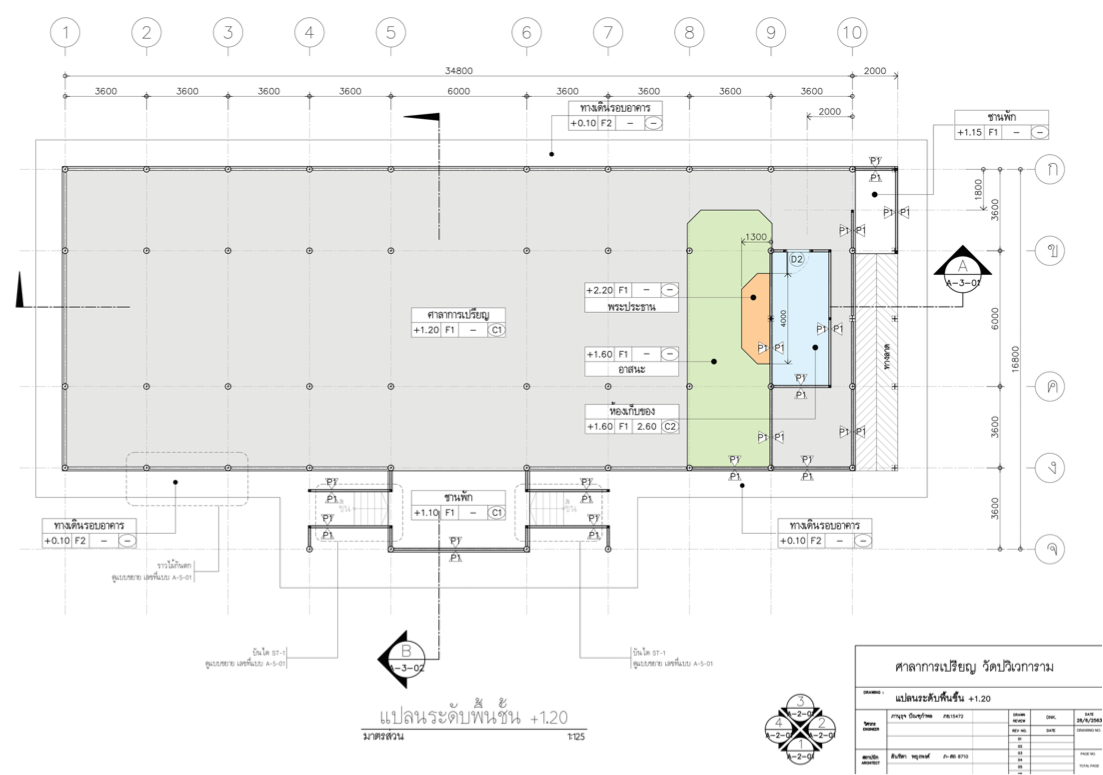
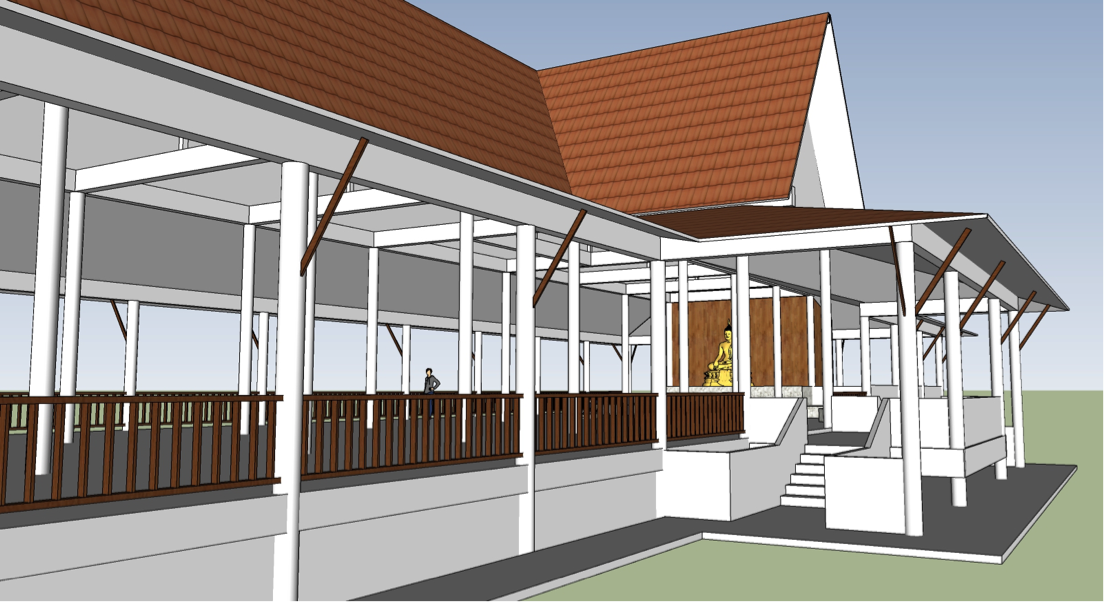
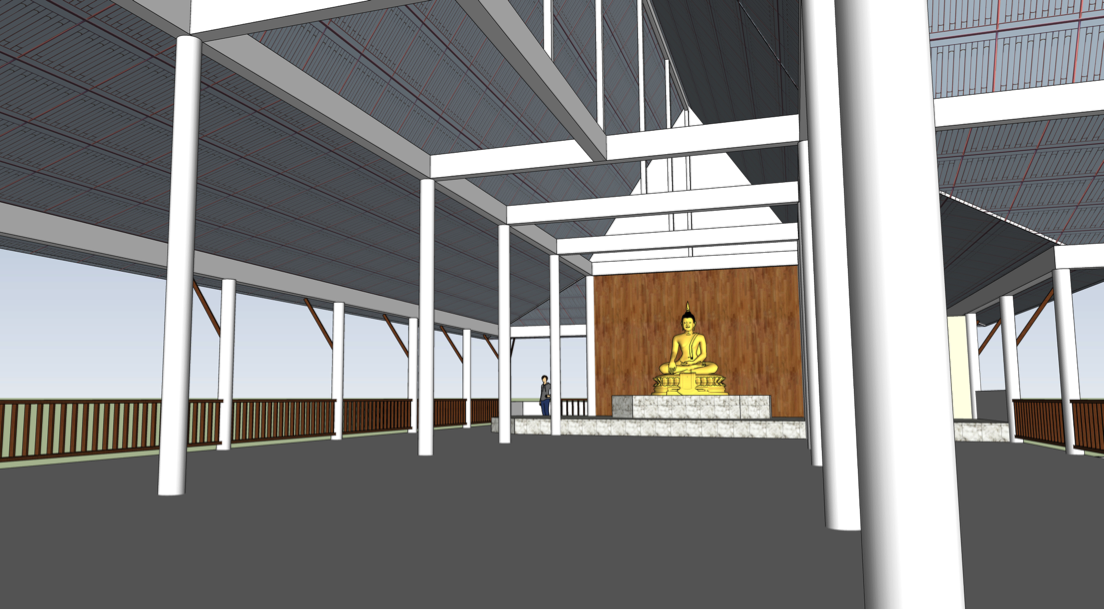
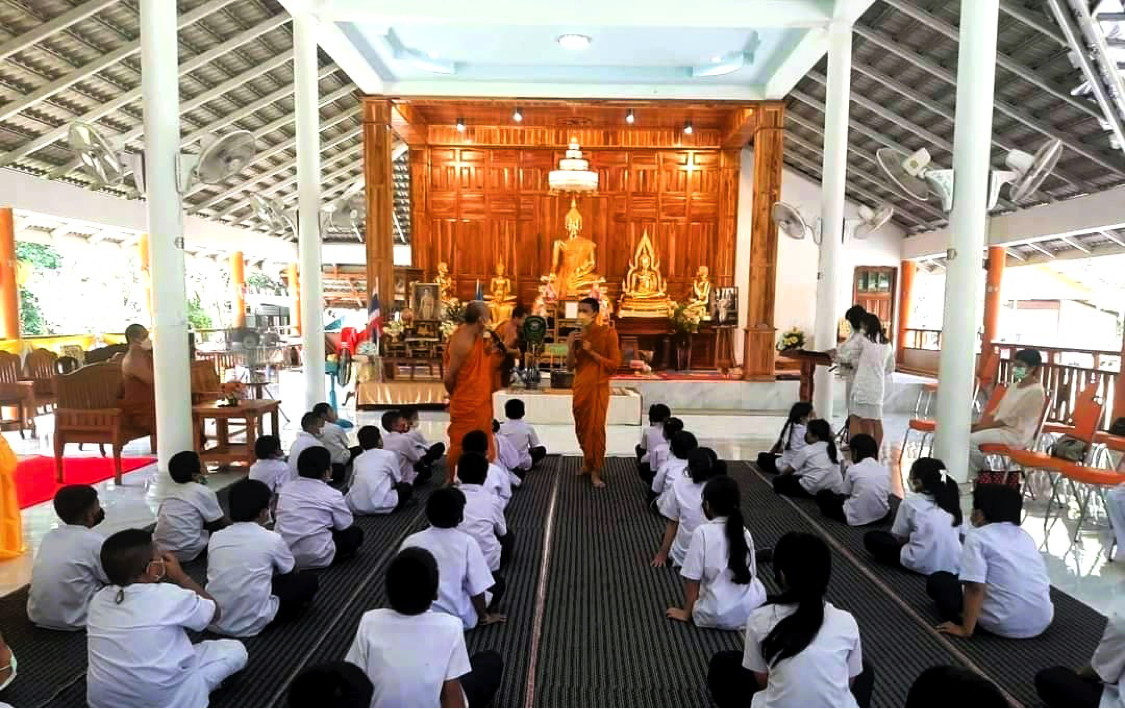
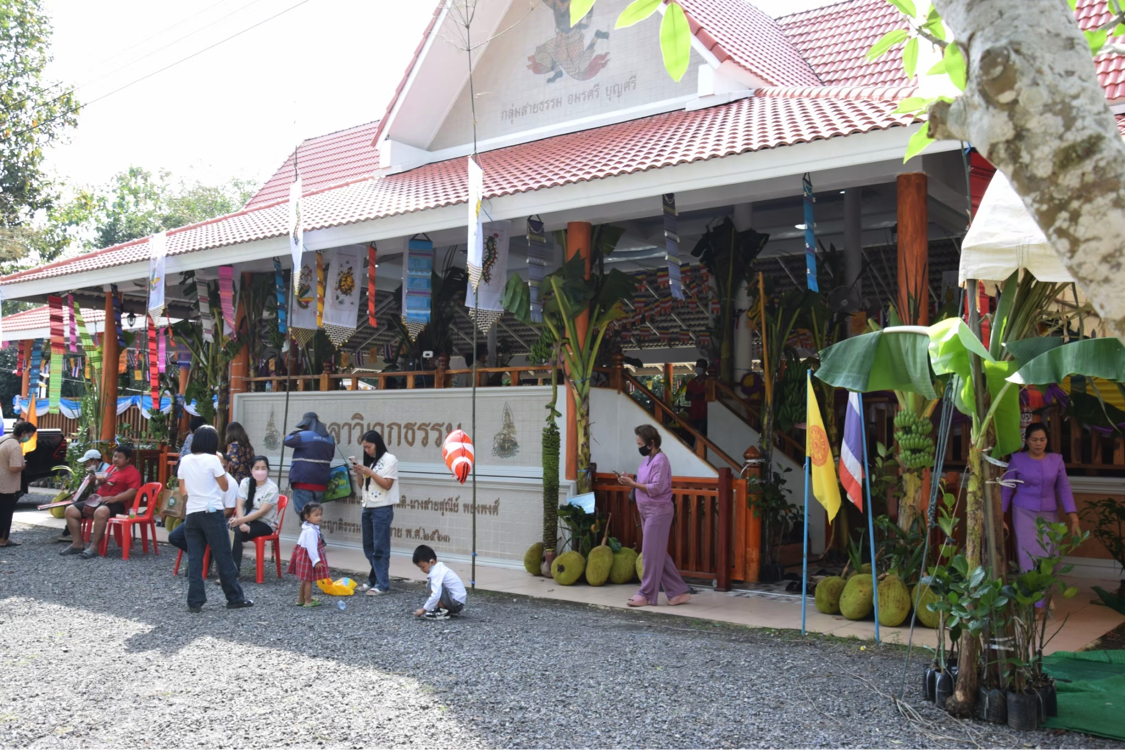
This meditation pavilion was prompted by the abbot of a Buddhist temple nestled in Prachinburi province. The design philosophy for the pavilion was grounded in simplicity, functionality, and reverence for its spiritual intent. Drawing inspiration from the traditional architectural blueprint of Buddhist pavilions, the project was imbued with a keen sensitivity to the cultural and practical needs of its patrons.
Spanning an expansive 80-rai terrain, the temple’s infrastructure primarily comprised a modest main building, encompassing approximately 120 square meters, which catered to general activities, while reserving its inner sanctum for significant Buddhist ceremonies. Thus, the initiation of the pavilion project was driven by a desire to accommodate the expanding congregation of faithful devotees and local villagers, fostering a sense of communal belonging and spiritual fulfillment.
Beyond its primary role as a venue for collective meditation, the pavilion was envisioned as a versatile communal space, capable of hosting seminars and workshops that catered to the needs of the broader community. Rooted in a commitment to sustainable and ethical design principles, the pavilion’s architecture seamlessly blended with the traditional aesthetics of Buddhist temples, featuring an open-air communal hall adorned with a characteristic gable roof.
Material selection was guided by considerations of both practicality and locality. The granite stone, sourced from nearby quarries, was meticulously laid to pave the pavilion’s stairs, ensuring safety and accessibility, particularly for elderly practitioners. Similarly, the procurement of ceramic floor tiles from domestic suppliers exemplified a judicious balance between cost-effectiveness and quality craftsmanship.
Following a construction period of five months, the completion of the pavilion marked a significant milestone in the temple’s journey, ushering in a new era of communal engagement and spiritual reflection. As the temple continues to evolve and adapt to the changing needs of its congregants, ongoing efforts to embellish and personalize the pavilion reflect its venerable heritage while embracing the aspirations of future generations.
Religion Does What Art Does
Author Name: Dichila Pasanta
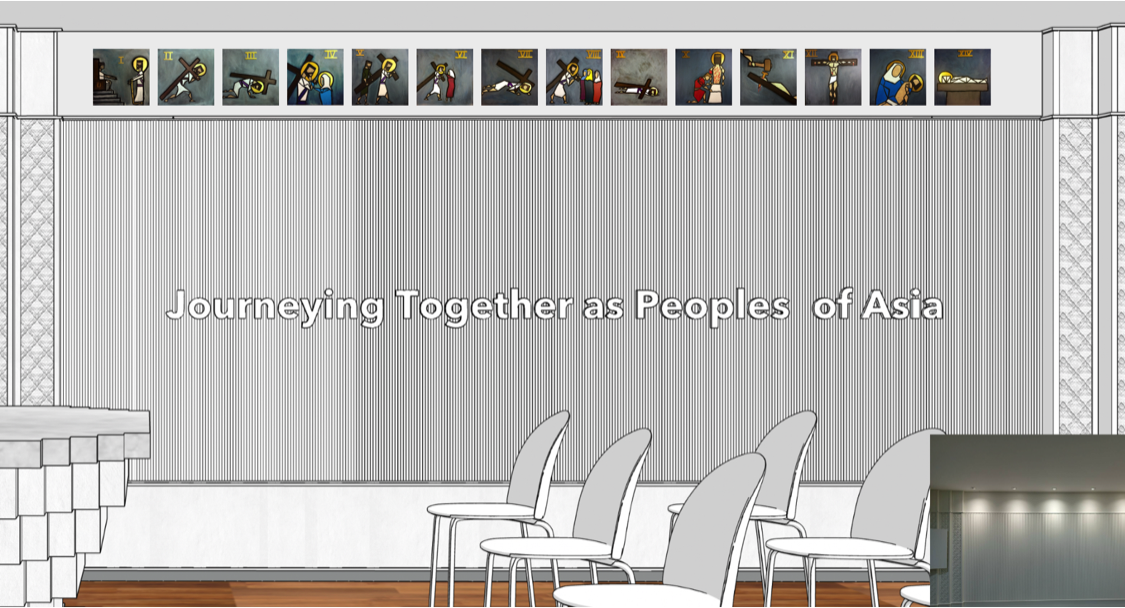
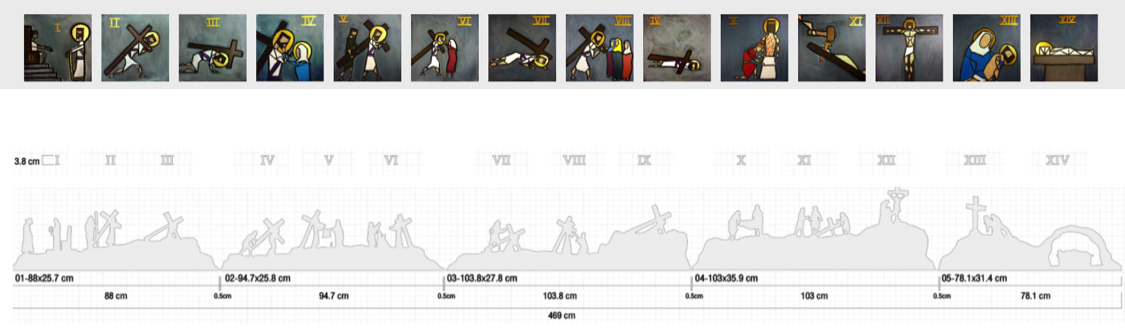
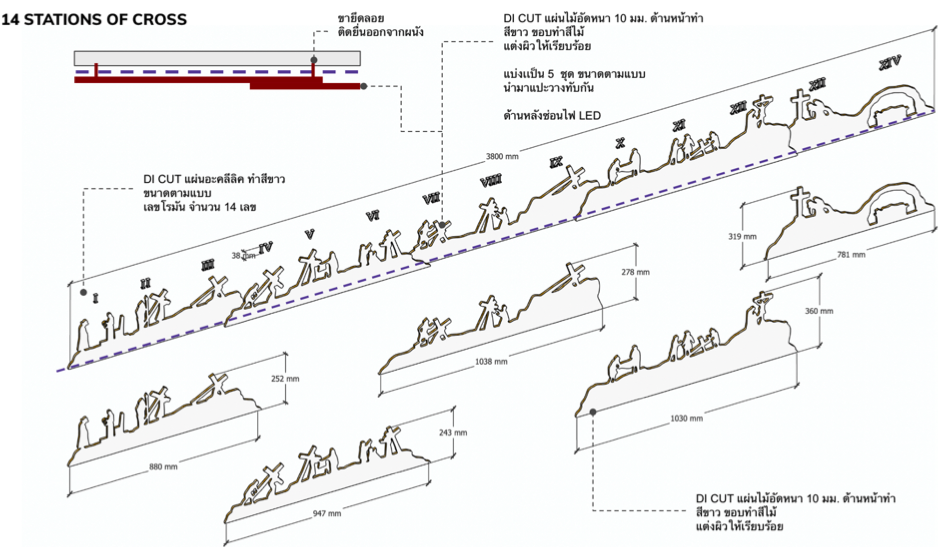
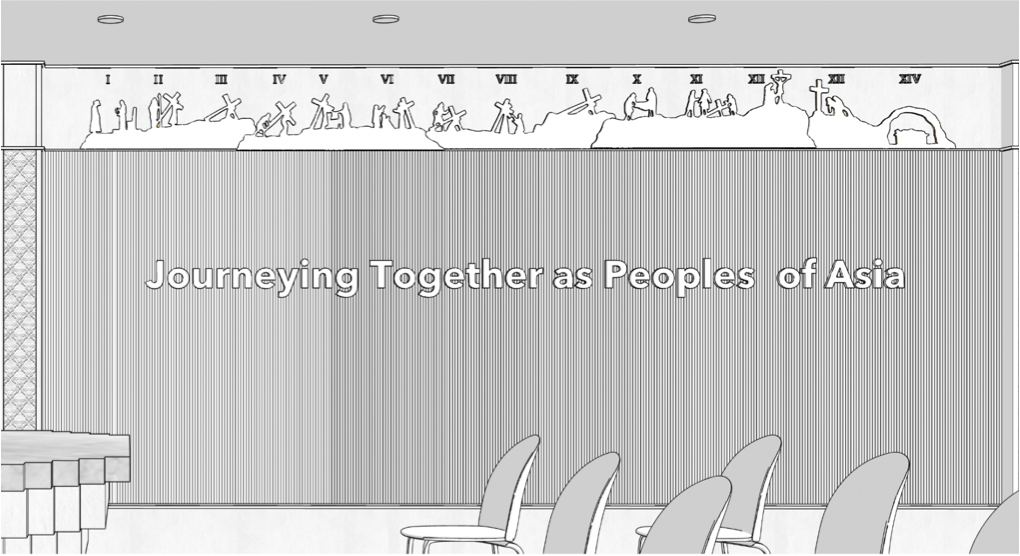
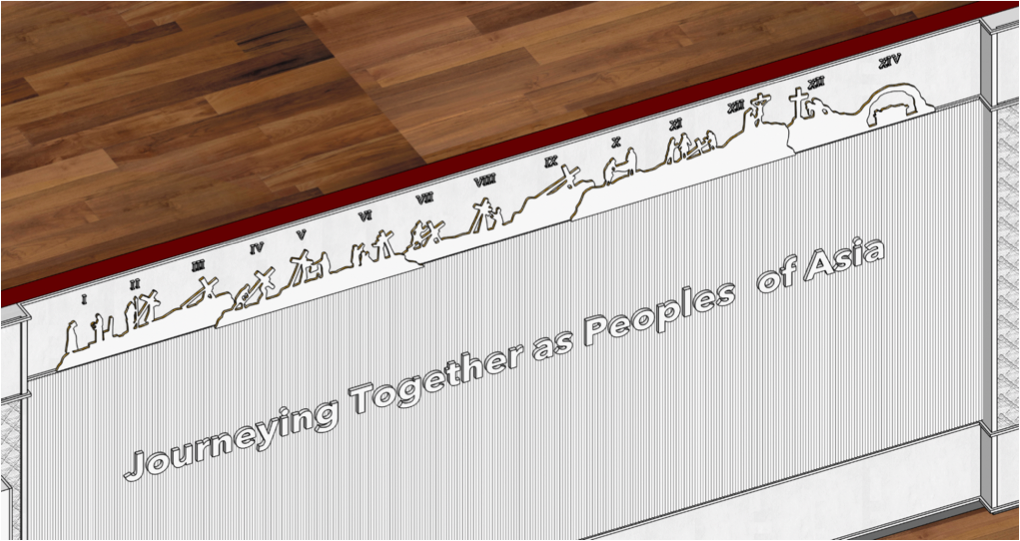
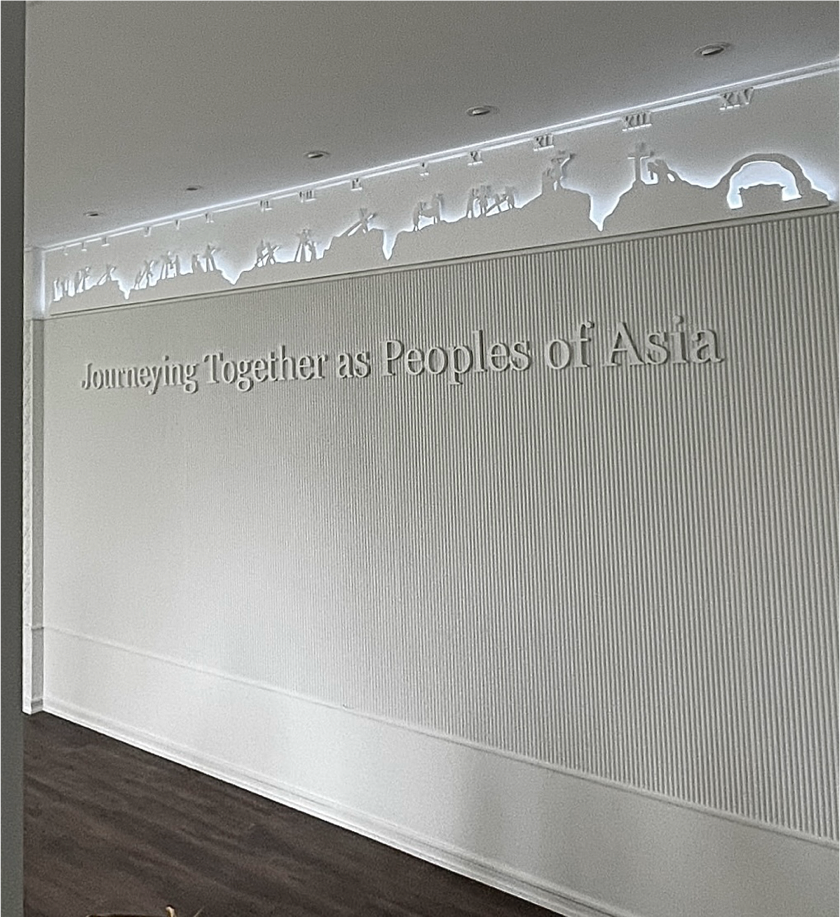
Unspeakable history can be beautifully explained by the arts, as the station of cross helped people easily understand the religion meaning and accompanying prayers. The aesthetic of art communicated religion beliefs, values though iconography and depictions of story throughout history. The station of the cross, is also known as the path of sorrow, are the fourteen steps Catholic devotion that commemorates Jesus Christ’s last day on earth as a man. The traditional art of station of cross can be always seen in every church to help the Christian faithfuls focus on prayer practices. Modern way for sacral architecture was the extremely minimalist aesthetics as white on white together with lighting could easily be adapted in recent design. Therefore the traditional art of station of cross story had been slightly developed to match to the modern interior space. Less details but not less story meaning also completely demonstrated the whole route explanation from the beginning to the end.
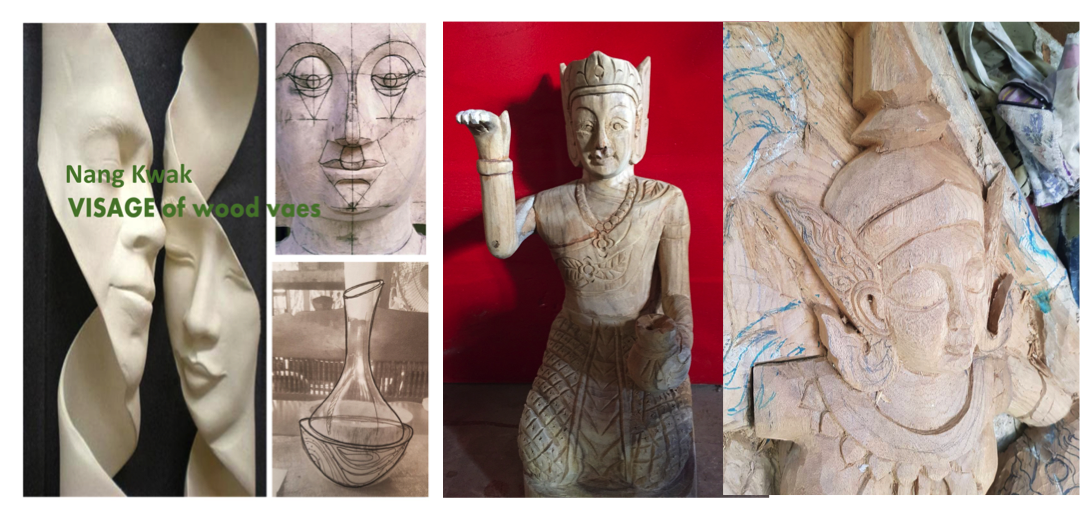
Myth Wood Vase (Nang-Kwak)
Author Name: Orn Laor Homsettee
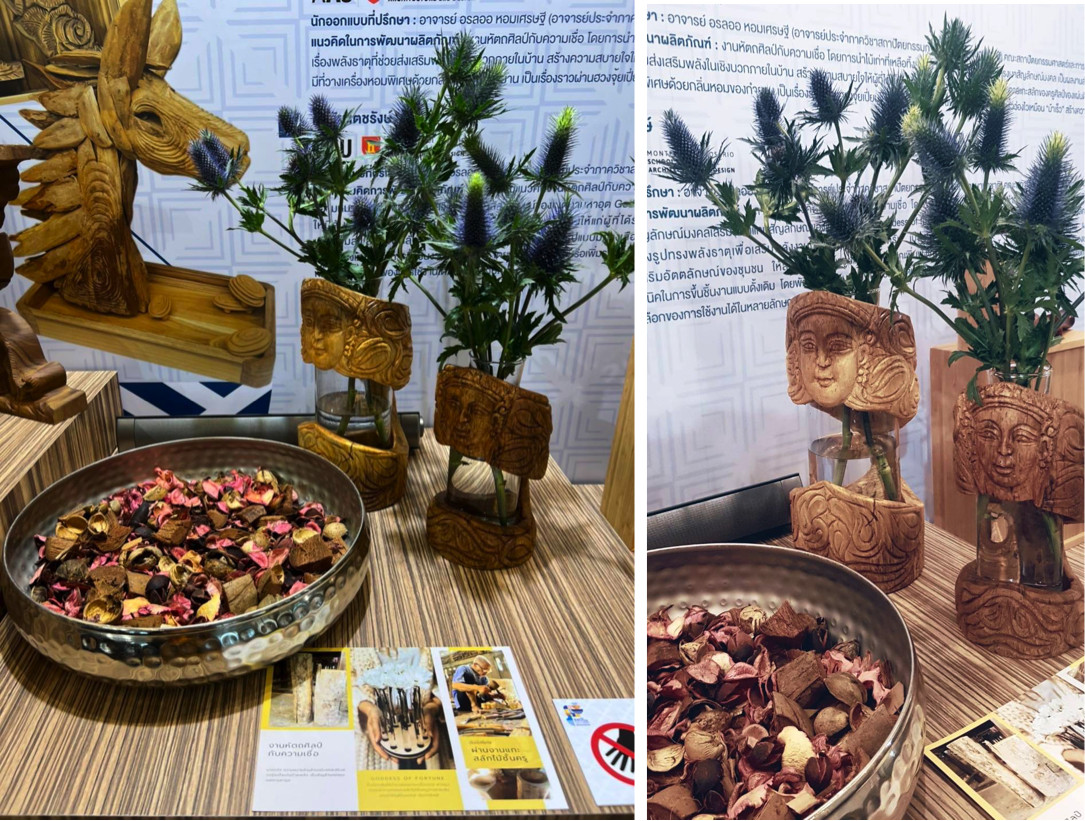
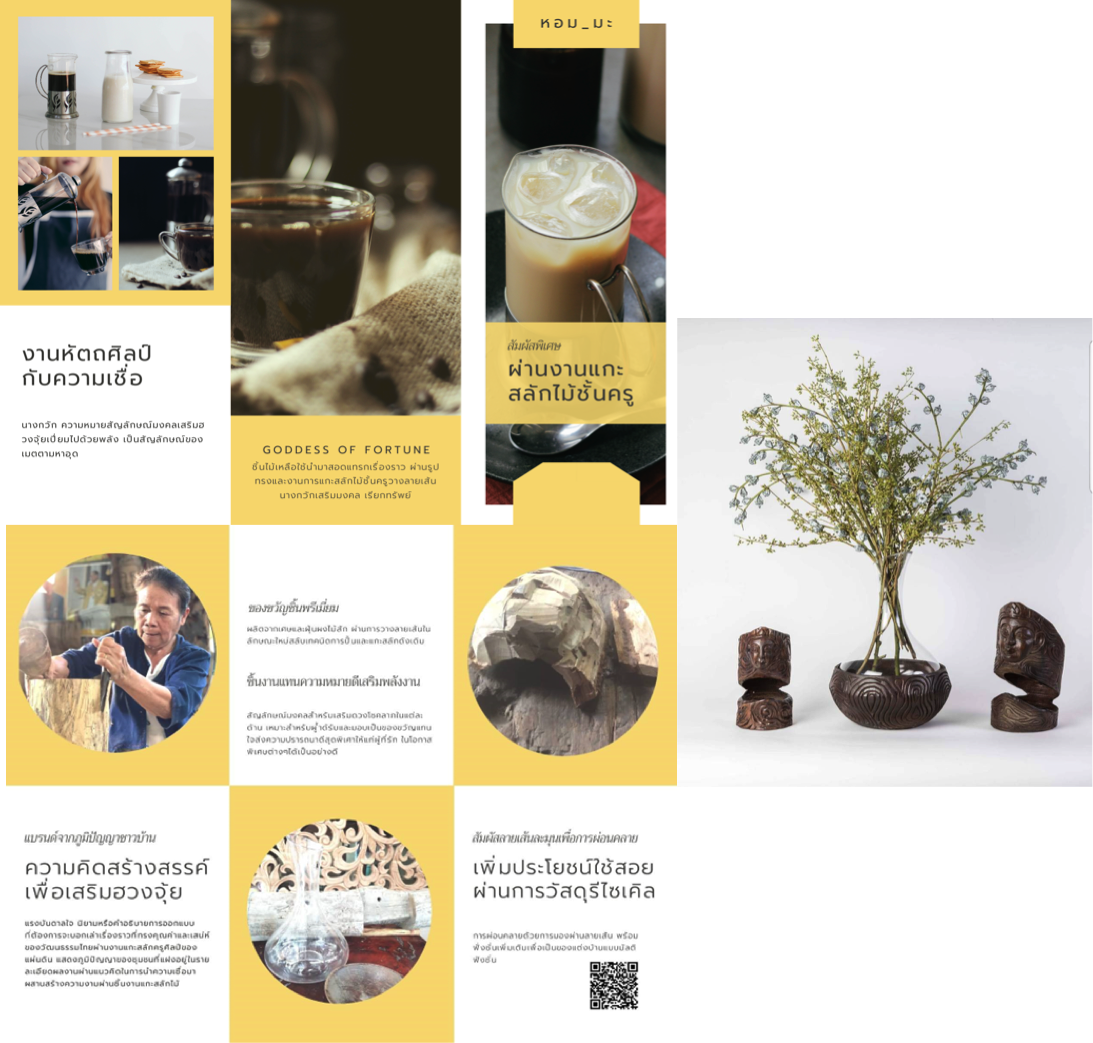
The design of home decorative items integrates belief and faith into the design concept to create sustainable Thai handicraft products and elevate their standards. Nowadays, beliefs influence design, whether through the principles of Feng Shui or the inclusion of auspicious items that can bring good fortune to life and business. This leads to the idea of designing products that serve both as home decorations with functional purposes and as auspicious items for the owner.
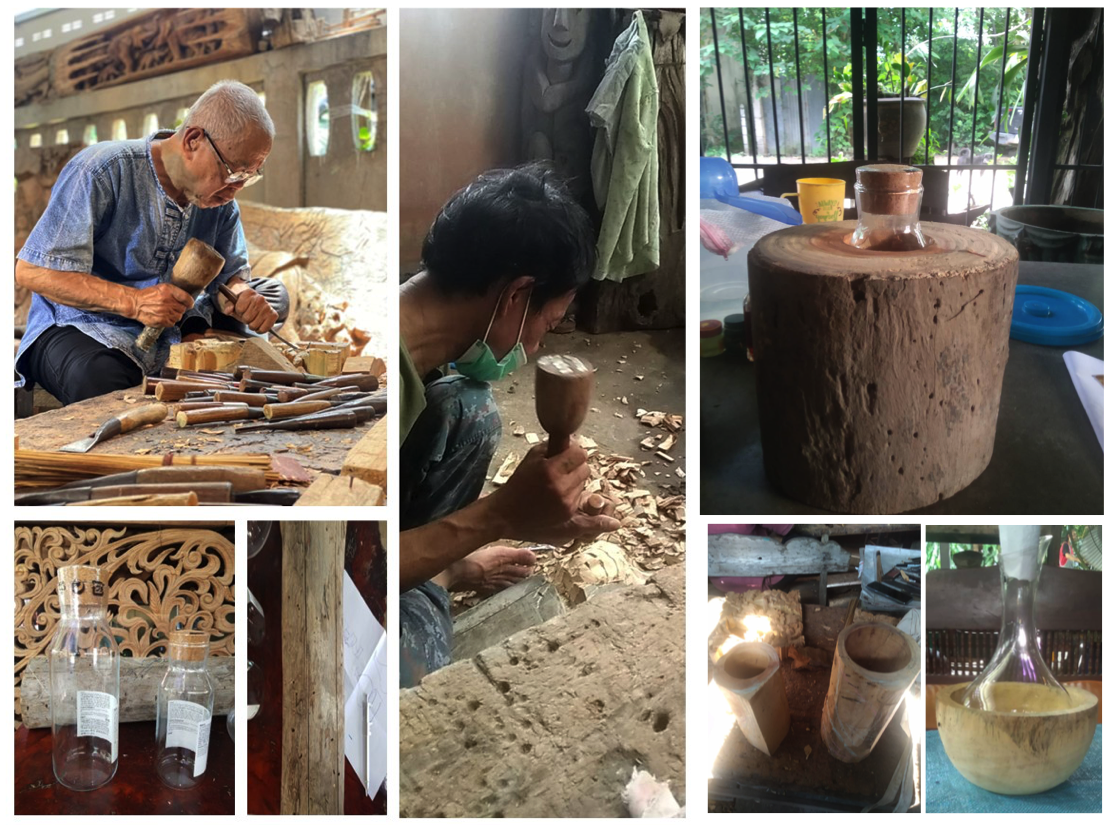
A key focus of the products is on the value of teak wood, which is easier to cut, saw, and polish than other types of wood. Teak can be used sustainably and possesses unique grain patterns. Designers create new storytelling elements to add value to traditional wood carving. The project collaborates with Thai local professionals under the SACIT (Sustainable Arts and Crafts Institute of Thailand / Public Organization).
Ideas involve creating perceived line patterns combined with the wood forms of Thai beliefs to enhance confidence through wood relief, shaping light and shadow. According to Thai beliefs, owning such items can bring wealth and business success. Designers add functionality to create a variety of uses, beyond mere display for worship. The design process maintains the uniqueness of local carvings to preserve the community’s identity, working together with craftsmen to analyze and solve problems so that the final shape meets specifications and expands the sales base to a wider market.
All works exhibited in Design Literacy Forum XI have been through a double-blind peer review by a committee comprising of internal and external committee members to ensure validity and quality.

